Modern Homesteading In Rural Mexico: Life At El Rancho Blog

jillian

By Jillian Vriend

The foundation walls of our first cob (straw, clay, and sand) structure are growing. It is like a puzzle, taking random stones and fitting them together to form a sixteen inch wide wall. This first structure is a sleeping and living cabana for Christopher with an outdoor veranda. We will also create one for Wayne and I up on the hill by the large boulders. Our next building will most likely be the common area kitchen and dining building with storage and a pantry. Or maybe the pit/compost toilets and shower stalls. Some days it feels as if there is so much still to do and it almost feels impossible. Other days it seems amazing the progress we are already making by taking it poco y poquito (little by little.)

foundation

I have become fond of the idea that we are homesteaders or perhaps home/heart/soulsteaders is even more apt. Homesteaders live sustainably and independently. A homestead is a sanctuary for individuals to grow their own food, including raising livestock (although we have only adopted the chickens here on the ranch to eat their eggs occasionally), to live much more simply, and to be unplugged from the grids. A modern homesteader is able to combine some of the conveniences of the modern age with techniques from our ancestors. The modern homesteader sees the bigger picture about the long term unviability of our industrial, profit-based, and growth obsessed culture. They feel that they don’t want to contribute to the consequences any longer of this culture and want to take providing of their own needs ‘into their own hands’ (and hearts and souls, as it were.)

For us, the awakening about the consequences of industrial society and its seemingly inevitable collapse, is what motivated us to set up a homestead here in Mexico. Our biggest priority was to find a place with its own water source, fertile and unspoiled topsoil to grow organically, land for us to build homes on out of natural materials, and at a cost that we could afford since we were leaving Canada with a finite nest egg and without definite means to earn money in the future. We also felt that the rural Mexican culture would be more able to withstand collapse as they tend to live much more simply and cheaply and resourcefully than we do in the US and Canada. The village near the ranch just got electricity in 2008 and still doesn’t have wired up internet, only satellite service. This is an agriculture and ranching area. Many of the adults and land owners here grew up in this area and there is a love of for the land and nature that is palpable in the people here. There is also a heartiness in the people here that we all admire and especially notice that older men here are quite robust and healthy.

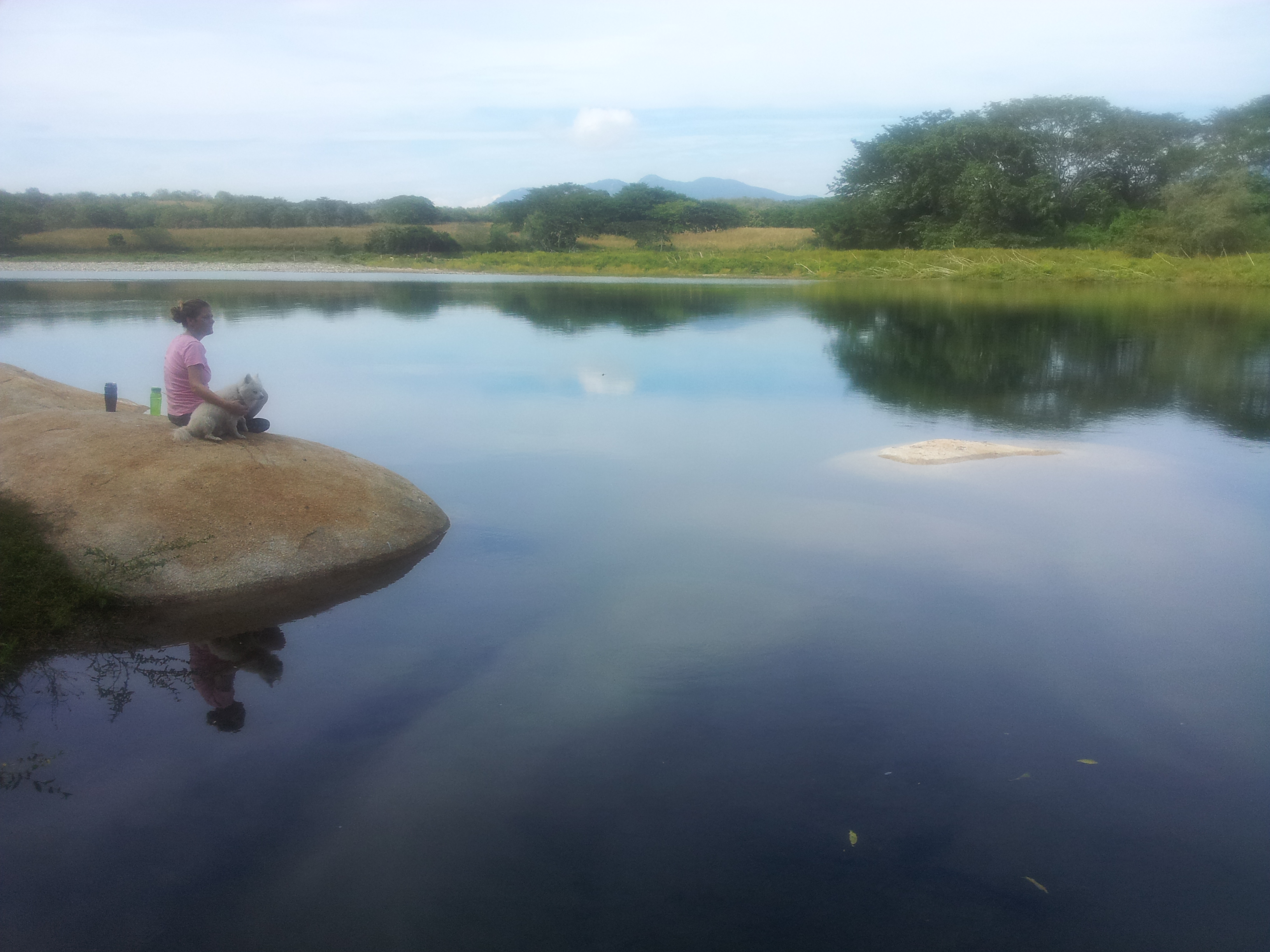
The learning curve over the last five months since we moved to our homestead has been huge. We have gotten some advice and guidance from locals here, but most of our guidance has been from a few good books and our own intuition. I am amazed at what I have learned and what I continue to learn every day about plants and how to grow them for food. My current learning curve is around saving seeds and what to plant in anticipation of the hot, humid, wet season that is coming soon. The ‘rainy season’ (which goes from June to September and into October sometimes) here is looming a bit large in the moment as we haven’t been through it before. Rising water levels of the river that runs in front of the ranch can make it challenging to get here and usually the only way to cross it is by the couple of horses that are ‘great swimmers.’ Two other people who live here on the ranch, a couple from Washington, are planning to buy a boat which we are hoping to use to boat here during the rainy season.

We are getting used to living with both unknowns and with a growing sense of security and safety about our choices to come here. We are becoming increasingly less reliant on industrial society and finding that giving up things that felt like necessities but are actually luxuries afforded to us through cheap oil primarily are not that hard to give up. And the benefits of appreciation, humility, and more connection with one another and the planet are huge.

Come visit us! Please visit soulfullheart.com to learn more about no cost volunteer opportunities to engage in healing, organic gardening, and natural building at a sustainable 700 acre eco-ranch in Mexico.

Building Foundations: Life At El Rancho Blog

jillian

By Jillian Vriend

Our world has been about seeds and plants and now, it is about rocks. Round river rocks and jagged creekbed rocks. Rocks stacked in a wall to form the foundation of our first cob house. We are using cob (a combination of sand, clay, and straw) mortar, which is getting us used to the sensation of mud on our hands and feet (you mix the cob with your feet). I feel my inner child in glee; we get to play in mud for a good reason! The rocks seem to have personalities and I didn’t realize that they can talk just as plants do. They seem to tell me where they will fit in the rock puzzle. And they all seem to want to be part of it. We are building foundations which could remain for centuries to be discovered by generations in the future.

Life cycles are ending in our first garden by the river, which we call the ‘rio garden.’ The bean plants that are over three months old and have been giving us beans for a few weeks are starting to die and wilt. The tomatoes are wilting in the sun and the ones that the caterpillars don’t get are a welcome addition to salsas. Every time I harvest a bean pod I think of the plant’s will to live encompassed in the drying out pods. Each seed represents life even as the plant itself is dying.

As I talked about in this blog entry about death and rebirth, it is the season of the Dark Madonna or Kali. In this spring season, there is a feeling of anything can happen and if you’ve been running from change, it will find you. Kali offers a stark mirror for that which we’ve been avoiding or haven’t wanted to face in our own shadows. But, always, She offers a rebirth after the death into what is more real and less false. This can be a painful process, however, as parts of us attach to what is current and what we’ve become familiar with. It can be a very intense experience to let go of what we have known, even if it wasn’t making us happy or fulfilled.

For us, a big shift is happening in our personal world. It looks most likely that Kathleen will be moving on, probably staying local in the Puerto Vallarta area. Kathleen has been with us since the beginning of our arrival here in Mexico in October and off and on for over three years. Besides being a friend, she also has been engaging in our SoulFullHeart process since the beginning of its inception. The process for which she has come to the decision to leave and our process around it is quite vulnerable and raw still in the moment, so I feel to leave that for our private digestion. But, in her going, I can feel the death and rebirth cycle in a very intimate way. I’ve been through enough of them, usually by choice in the last several years as I’ve surrendered more to the Mother, to trust that whatever is lost or dies in this process will end up birthing me and others into a more authentic place. A place that we need to be. A place that ends up being the best one, even if it is hard to see that in the moment of loss and adjustment.

I feel even more how the ranch offers a hugely catalytic growth opportunity for those who desire it. Being unplugged from so many of the western world’s grids and immersed in nature the way we are here pushes up conditioning for us to feel and heal. I feel that anyone coming to stay here or visit here doesn’t remain unchanged. I certainly have been changed and continue to be, as have those around me have as well.

Please visit soulfullheart.com to learn more about no cost volunteer opportunities to engage in healing, organic gardening, and natural building at a sustainable 700 acre eco-ranch in Mexico.

Build It And Maybe They Will Come: Life At El Rancho Blog

20141218_115604

By Jelelle Awen

Our life now has been shifting from gardening to building. Maintaining the three gardens is still a daily effort, mostly about harvesting beans (yeah!) and picking caterpillars off our tomato plants (yuck!). All of the gardens are maturing with some vegetables already having been harvested and replanted. We are now growing or harvesting fourteen kinds of beans, which grow very well here in Mexico and are natural nitrogen fixers. More standard varieties such as black, garbanzo, red, lima, pinto, green beans, and mung. Plus more exotic types from the heirloom seed company: cebra, parraleno, milpa, x-plon, cigna, lab lab, jacobo. Each bean variety has been a mystery: will it be a runner? A bush bean? A half runner?

The shift to building has been a somewhat sudden one. We felt a bit daunted at first wondering how we were going to build homes for ourselves with a very limited budget. Then, we started researching natural building methods and specifically cob building. We downloaded a very informative and encouraging book (which you can get here) about it and decided that it was the method that makes the most sense based on our resources. There is plenty of clay, sand, and straw here on the ranch to create a great cob mix. Cob invites creativity, resourcefulness, curved lines, and synergy with the earth. Our vision is to create three cabanas (little houses) for each of us, a community kitchen and dining structure, a compost toilet and shower building, and a group living room and healing space on the water tank structure that already exists on our lot.

Based on the needs we have for help with this building project, we are now offering free and low cost work exchange and immersion programs for anyone who would like to come and experience the ranch, focus on their personal growth process, and learn about or lend their natural building skills. Please go to soulfullheartwayoflife.com read more about these programs.

The time we’ve spent here has been so catalytic and nourishing that we are desirous to share it with others. We feel that spending time here really gives someone a taste for living sustainably and off grid in a practical and very visceral way. It is important practice for anyone thinking seriously about going off grid, growing their own food, and doing their own natural building. There is a natural growth process and deconditioning that happens when living behind a culture that you are used to and ways of life that you have become conditioned to. Without being able to process this deconditioning with someone, it becomes a difficult transition for most people. We have experienced ourselves quite powerful movements related to this life change and feel we can serve others based on this experience and our many years of focus on emotional and spiritual work.

Jelelle Awen is co-creator and facilitator of the SoulFullHeart Way Of Life. Go here to connect with Jelelle on facebookVisit the SoulFullHeart website  for more information about virtual sessions with her.

Cows, caterpillars, and cabbage: Life At El Rancho Blog

20141218_115604

By Jelelle Awen

Nature is a better partner than slave– Gaia’s Garden

I am dreaming of plants. Last night, the big crisis of my dream was about providing a trellis for a runner-type sweet pea plant to weave and wrap around. Would I be able to get it supported before it collapsed onto the soil in defeat? Big drama. My dream was most likely a reflection of an increasing reality this week of troubleshooting and responsive problem solving related to our gardens.

We entered our Tranquila garden a couple days ago to discover hoof sized indents over many of our garden beds. Tranquila is more like a nursery than a garden, with many fragile seedlings and still germinating seeds that still haven’t woken from their slumber. The vacas (cows) had busted through a weak area of fencing (now fortified with 3 higher courses of well anchored barbed wire) and found, fortunately, that little in our fledgling garden was to their liking…..other than all the black bean seedlings and most of the one inch tall amaranth and quinoa plants.

My heart hurt as I cleaned up their damage, especially since I had spent the morning ‘saving’ our first flowering and fruiting tomato plants from hornworm caterpillars, hand picking them off and dumping them in a bucket of soapy water. It felt a bit like we were under siege by nature. I was reminded of the wild setting for which we are attempting to grow our food. We are trying to domesticate nature. I like to feel that rather than a bending of nature to our will. We are in communion with it. This connection is the essence of producing home grown food that is chemical-free, nutrient dense, and, also, doesn’t have a negative impact on the environment.

Nature reminded us this week that it is ultimately uncontrollable. If we get a good harvest of any of our vegetables, it is nature’s desire even as it is also due to our skill and responsiveness (and sourcing good, quality heirloom seeds and deeply efforted compost.) Instead of getting hugely upset at the cow damage, I surrendered to it and immediately noticed something interesting. All of the beds that the vacas had left their marks on were ones that I had planned to replant or change in some way. Every one. The black beans were spaced too close together (something I learned after watching our frijoles negroes in the Rio Garden get bushier and bushier), so I was able to replant and respace them. I wanted to create rows of amaranth and quinoa rather than scattering the seed as I had done originally, so I could see them better as well as be able to provide mulch around the rows. Now I could do that while still preserving seedlings that had survived.

So nature created more work in some ways, but, also, it worked out in the end for the best. It is difficult to get too stressed about anything here on the ranch as resourcefulness and responsiveness just seem to come more naturally than in the western, more industrialized world. Every crisis has a solution and doesn’t push up the same levels of stress and anxiety as the common workplace drama.

We are entering the season of Kali. Kali represents death and rebirth; cycles of change and transformation; temperamental weather and emotional patterns. I was reminded of this also as I felt the edges of how easy it would be for all of our ‘hard work’ on the gardens to be wiped out by animals, a strong storm, or a swarm of damaging insects.

When we get our food from the grocery store, we have no sense of this fragility or of our fortune either. We fill our shopping carts and drive food that has been imported from all over the world home to be stored in our cabinets and fridges. Here on the ranch, because we don’t have refrigeration (other than two zeer evaporative cooling pots) and the nearest grocery store is 90 minutes away, food harvest and preservation is a concentrated and connected activity.

We picked some bok choy cabbage leaves today intending to use them for cabbage rolls for dinner tonight. I share the recipe below. No fossil fuels or chemicals were needed (not for working the soil, the fertilizer, the ‘pest control,’ the harvesting, the packaging or transport!); just our labor, our love, and our time. When we eat our cabbage rolls tonight, this energy will come through and increase our enjoyment and appreciation. Nature does make a better partner (however unpredictable), than slave.

Harvest this week and recipes: Daikon radish, mizuna (asian lettuce), arugula, tatsoi (asian cabbage), bok choy, kale, and cilantro

Right now is about greens and lettuces. Mizuna and arugula are braving the heat to produce leaves of nutritional goodness. Bok choy, tatsoi, and kale provide earthy flavor and plenty of antioxidants. They are so welcome since greens and most lettuce are not sold here in most tiendas in Mexico, only iceberg lettuce and traditional cabbage. Faced with a harvest of greens, we came up with two vegetarian recipes that used them in way that was beyond the usual stir fry and ensalada.

Bok Choy Cabbage Rolls-

Cabbage Rolls:

Eight to Ten large bok choy or kale leaves (two per person), the leaves need to be 3 by 4 inches

one cup of cooked brown or wild rice

one cup of TVP (or tempeh), add one cup of hot water and stir together

one half daikon radish, chopped

stems of bok choy leaves (if using), chopped

cilantro, cumin, soy sauce to taste

Asian Sauce:

Combine half a cup of soy sauce, 2 tablespoons olive oil, 1 tablespoon balsamic vinegar, 1 tablespoon sesame seeds, one garlic clove minced, chili powder to taste

Bring to boil a couple inches of water in a pot with a steamer basket. Combine TVP, rice, and chopped daikon in a bowl and add seasonings to taste. Heat stuffing ingredients over medium heat until TVP is cooked and rice is heated. Lay out bok choy or other greens leaf by leaf being careful not to tear them. Place the leaf length wise in front of you and fill it with the stuffing just along the middle along the spine of the leaf. Don’t overstuff as it needs to be easy to fold without tearing. Fold the side closest to you first and then the two top and bottom edges go in and then roll it the rest of the way (similar to a burrito). Place the rolls carefully in a steamer basket for three to five minutes. Serve with the asian sauce on the side.

Eggs In A Nest-

This recipe has been modified from one provided in Animal, Vegetable, Miracle by Barbara Kingsolver. This is an insightful and inspiring book about a famous author who ate only foods produced from her own garden and locally grown for one year.

2 cups uncooked brown rice

Olive oil

medium onion, chopped

2 cloves of garlic, minced

carrots, chopped

daikon radish, chopped

1 very large bunch of bok choy, kale, chard or other leafy green

8 eggs (if you need to make more eggs because you have more people just poach extras in another pan)

soy sauce, cumin, and salt to taste

Cook rice with four cups of water in a covered pot while other ingredients are being prepared. Saute onion and garlic in olive oil in a wide skillet until lightly golden. Mix in carrots and daikon radish and cook for a few minutes. Add greens and cook with the pan covered for a few more minutes. Uncover, stir well, then use the back of a spoon to make depressions in the cooked leaves, circling the pan like numbers on a clock. Break an egg into each depression, being careful to keep yolks whole. Cover pan again and allow eggs to poach for 3 to 10 minutes depending on how runny you like them. Remove from heat and serve over rice with guacamole salsa (or without).

Guacamole Salsa-

2 large ripe avocados, seed removed

8 tomatillos (or omit if you don’t have them and substitute with another tomato)

1 red tomato

handful of cilantro

Juice from one lime or lemon

half a jalapeno or tablespoon of chili powder or omit if you don’t like spicy foods

cumin and salt to taste

Boil tomatillos for five minutes or until soft. Combine them in a food processor with the other ingredients until mostly smooth. Serve chilled and is best if used within the hour.

Jelelle Awen is co-creator and facilitator of the SoulFullHeart Way Of Life. Go here to connect with Jelelle on facebookVisit the SoulFullHeart website  for more information about virtual sessions with her.

Brace for Impact: Life at El Rancho

 brace for impact

By Jelelle Awen

“The most difficult thing we have to do in order to survive the coming crash is to renounce the life of artificial luxury that has been the temporary product of the systematic destruction of our life support systems.” – Brace For Impact, Thomas Lewis

Renouncing a life of artificial luxury. Yes, I can relate to that. And especially the word, ‘artificial’. Artificial luxuries compared to natural luxuries. Artificial luxuries need to be attained, maintained, and possessed. Natural luxuries arise to be experienced and cannot really be owned. Artificial luxuries are temporary while natural ones are enduring. Maybe it’s as simple as artificial luxuries are man-made and natural ones….well, they are natural.

Systemic destruction of our life support systems. In every way that is imaginable, humans are indeed destroying the very things that are vital for our survival. That we can do this for so little reward or benefit (beyond the very artificial and temporary luxury of money attainment) would be baffling without the picture of the false self and its evolution. The false self, in a way, is an artificial luxury, created by modern, egoic circumstances that require a strategic, self image-based, money-focused, and non-vulnerable way of relating to the world. The false self developed as a core defensive structure that is a product of an industrialized environment.

I recently read Brace For Impact by Thomas Lewis again. Thomas Lewis has a beautiful generalist mind, able to analyze and present information without mentally getting bogged down too much in the details or needing to ‘prove his case’. He presents a compelling and inspiring argument for inevitable collapse of industrial society due to the areas of water scarcity, peak oil production, industrial agriculture and meat production, global climate change-related weather events, political corruption, economic unsustainability and much more. Reading this book is to have your eyes opened, your heart hurting, your gut aching, and your initiative charging. The last chapter about the urgency of finding an off grid, rural, safe sanctuary and learning ‘back to basics’ homesteading skills was particularly validating to me related to the choices I and three others have made recently moving to an off-grid ranch in Mexico.

While it was immensely validating, I felt there was a missing piece in the writing. Thomas Lewis talks eloquently about what is happening, but less succinctly about why it is happening. He offers a picture of addiction to money and to greed that feels true, but without a specific sense of why this addiction has been necessary. We feel that all addictions have unfelt emotional congestion at their roots. The addiction is an outward manifestation of an inner need going unmet and unfelt. If money subconsciously represents love and how we feel about it (which I feel is true after coaching and facilitating people around their ‘money issues’), then the need for love is the biggest one that is going unmet in all the money accumulation that is leading to so much destruction of our planet and ourselves. It is our disconnection from our deep need for love that manifests into acting without love toward other humans, animals, and the living planet.

In my experience of the last ten years of healing my own false self and others, I ultimately hold the false self with equal parts love and challenge. Love invites the false self into authentic expression through nourishing and real experience of the love it never knew that it always needed. Challenge holds the false self accountable to keep being vulnerable, surrendering to the growing authentic self, and letting go of things (such as artificial luxuries) that keep it falsely powerful.

The loving challenge our false selves are being offered at this time in modern history is to shift very significantly our lifestyles to sustainable, authentic, and love-based ones. If our false selves are unwilling to shift or to even see that there are very compelling reasons to shift, then there is little to be offered by me or anyone else about the coming collapse and how to survive it. For those that are ready to shift and also see that there is an absolute necessity to do so, I invite them to feel how it is their false self that has feelings of resistance, doubt, trepidation, and fear of change. It is the false self that is attached to artificial luxuries and it takes a lot of natural luxuries such as love and the bounty and magic offered by nature for them to let it go.

The first time I read Brace For Impact, I was still living in Canada in a fairly comfortable life, although I had already started letting go of many things. Reading the book inspired me greatly to keep going with my search for a sanctuary and to actually make the move to living off grid in Mexico. There was little to no resistance inside of me (no real false self protest) to letting go of the artificial luxuries that I’ve known my whole life. And, I am now experiencing in my daily life that I can not only survive without them; I am thriving in deeply nourishing ways that bring me back to the luxuries that only nature and living an authentic life can bring.

Jelelle Awen is co-creator and facilitator of the SoulFullHeart Way Of Life. Go here to connect with Jelelle on facebookVisit the SoulFullHeart website  for more information about virtual sessions with her.

The Emerging Me Through Natural Education

 IMG_1952

By Christopher Tydeman

In my former life, I was a teacher. I taught a range of ages from 7 to 12. I taught reading, writing, mathematics, history, science…et al. While I was teaching I was wondering if I was really teaching anything at all. I mean, yeah, I was helping with some basic fundamentals that are the building blocks of an education. But the content was a mixture of somewhat useful and interesting to downright drab and boring. I tried my best to bring in something meaningful and engaging but, to be honest, it was a lot of work. It all had to tie into the “Standards” of the prevailing curricula. Oh yes, the Standards.

We want our children to be “competent” so that they are “successful in today’s highly competitive world.” As a former parent to a school-aged child, I bought that with half my heart and all my mind. I passed that down to my students and their parents and care-givers. If they could demonstrate “proficiency” they would have a much better chance of “making a better life for themselves”.

I agree that my use of quotes is a bit tongue and cheek seasoned with sarcasm. That is my intention. Even while I was buying and selling those words, I could feel how devoid of humanity they really were. The Standards System, or Core Knowledge, or whatever the hell they are calling it now, is nothing more than a conveyor belt by which the Industrial Machine can create its submissive robots. I couldn’t participate in that system anymore without being guilty by association.

Why am I writing about this now? Great question. It has been two years now that I have left my teaching career. I am also now just learning what real education is all about…self-sufficiency, emotional awareness and fluency, and a place to discover and nuture our Divinely-given gifts. I guess I just realized I am in school for the first time since I was a child, where learning happened through creative play and experimentation. As an adult, I can add a lot of physical work to that list. This was the education I wished I could have given my daughter and my students. This is the shit that really matters. I knew it mattered because my students went crazy for nature, food, play, and art. They, as well as us older children, were born with the Divine Fingerprint. The desire to be with what we need most as human beings.

Somewhere we forgot that along the way. Convinced ourselves it must be more complicated than that. But as I sit here in Mexico with gardens literally popping out the ground from our own research, intuition, play and labor, I can tell you it isn’t. Granted, it is hard work. I have worked hard before, but this is for our food. Our sustenance and currency. Our hearts and our souls. You can’t get more real than that. I am learning more about myself and nature, as Mother intended. This is the real classroom.

So, I am back to being a student again. That is hard for the Industrial part of me who thought we had it all figured out. Put in the time and retire in peace. But once you feel your true, wild, natural self you can’t stay in the System without feeling the rub, the pain. The un-naturalness of it all. The insanity. This part of me is becoming more aware of how much happier he is now than he was then. I am beginning to feel a new me arising from this transition from teacher to student. From Industrial Self to Natural Self.

At some point I see myself teaching again. Not sure what that would look like, but I know what it wouldn’t. Been there, done that. I see being a part of a new reality for education. One that will emerge from the collapse of the old. For now, I am enjoying the ride of sitting in the student seat. Learning from my SoulFullHeart family, the ranch workers, the animals, the plants, and the Divine. They are the best teachers I have ever had. Time to rewrite the standards from the inside out.

Organic SoulFullHeart Gardens At Rancho Amigos- Jardines Organico De SoulFullHeart A Rancho Amigos

Our Gardens

By Jelelle Awen
garden1


One of the most pressing issues in our modern age is the need for chemical-free, environmentally sustainable, diverse, preserved, and homegrown food. The majority of food stock in grocery stores is shipped in by eighteen wheelers from hundreds and even thousands of miles away. Anyone who has eaten a banana in December and doesn’t live somewhere tropical has experienced transit-based produce. Most stores hold very little back stock, only about three days worth with no regional supply houses available since the ‘just in time’ delivery system was implemented many years ago. Produce has especially high ‘fuel miles’, the amount of distance that it traveled by truck to reach your location. The produce that does reach the stores has usually been genetically modified (even patented in some cases!), sprayed very liberally with toxic substances, and harvested before it was actually ripe. And it tastes about that good too.

Awareness of the dismal state of modern food brings an increasing need for everyone to grow their own organic produce if possible. We’ve had a strong desire to grow our own food organically following permaculture and ecological design principles. We wanted to create garden spaces that would meld conscious design with respect and understanding of nature’s principles. We also wanted to blend modern practices with indigenous and native ones, creating a mixture between the two that would honor both.

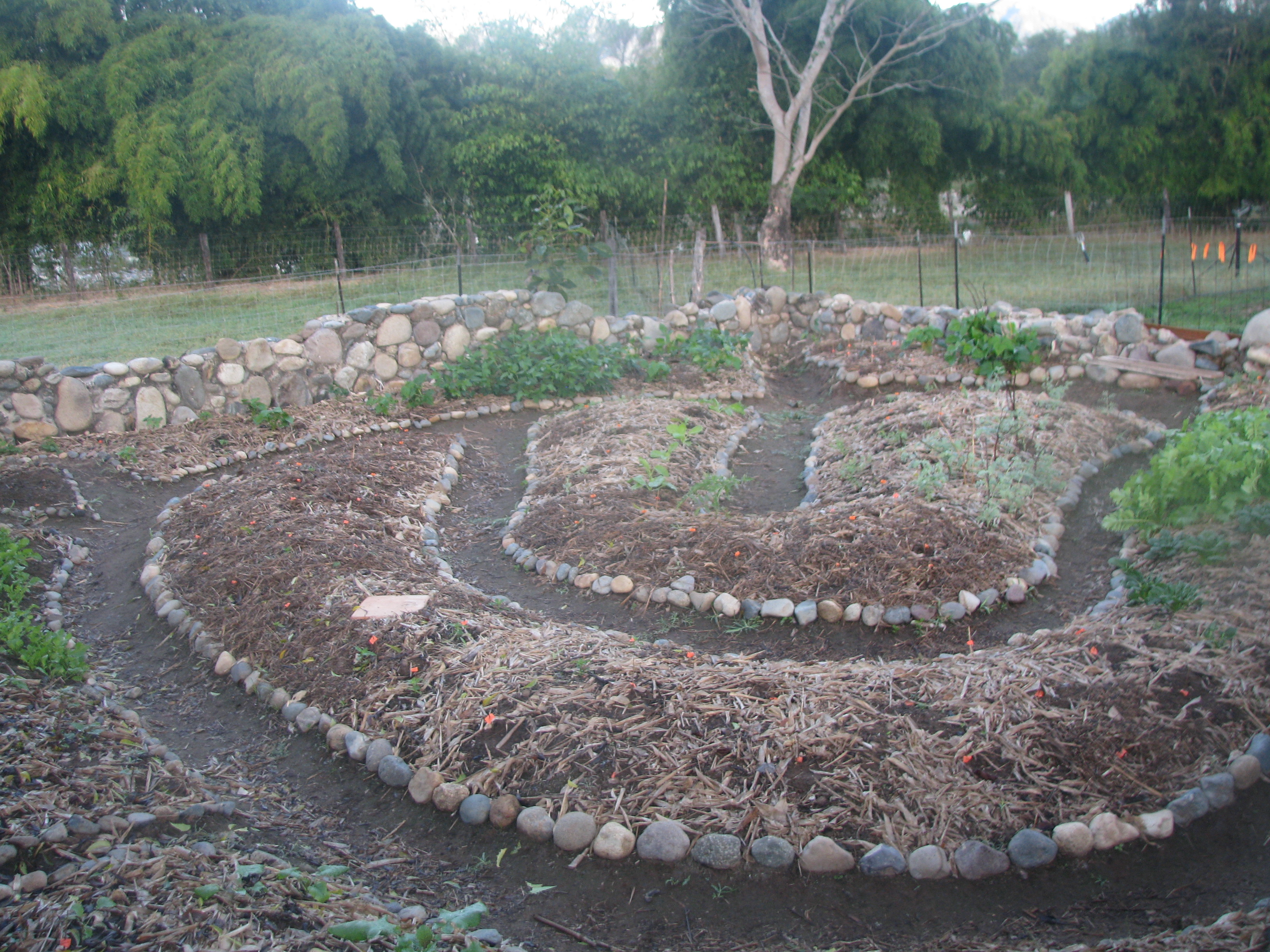
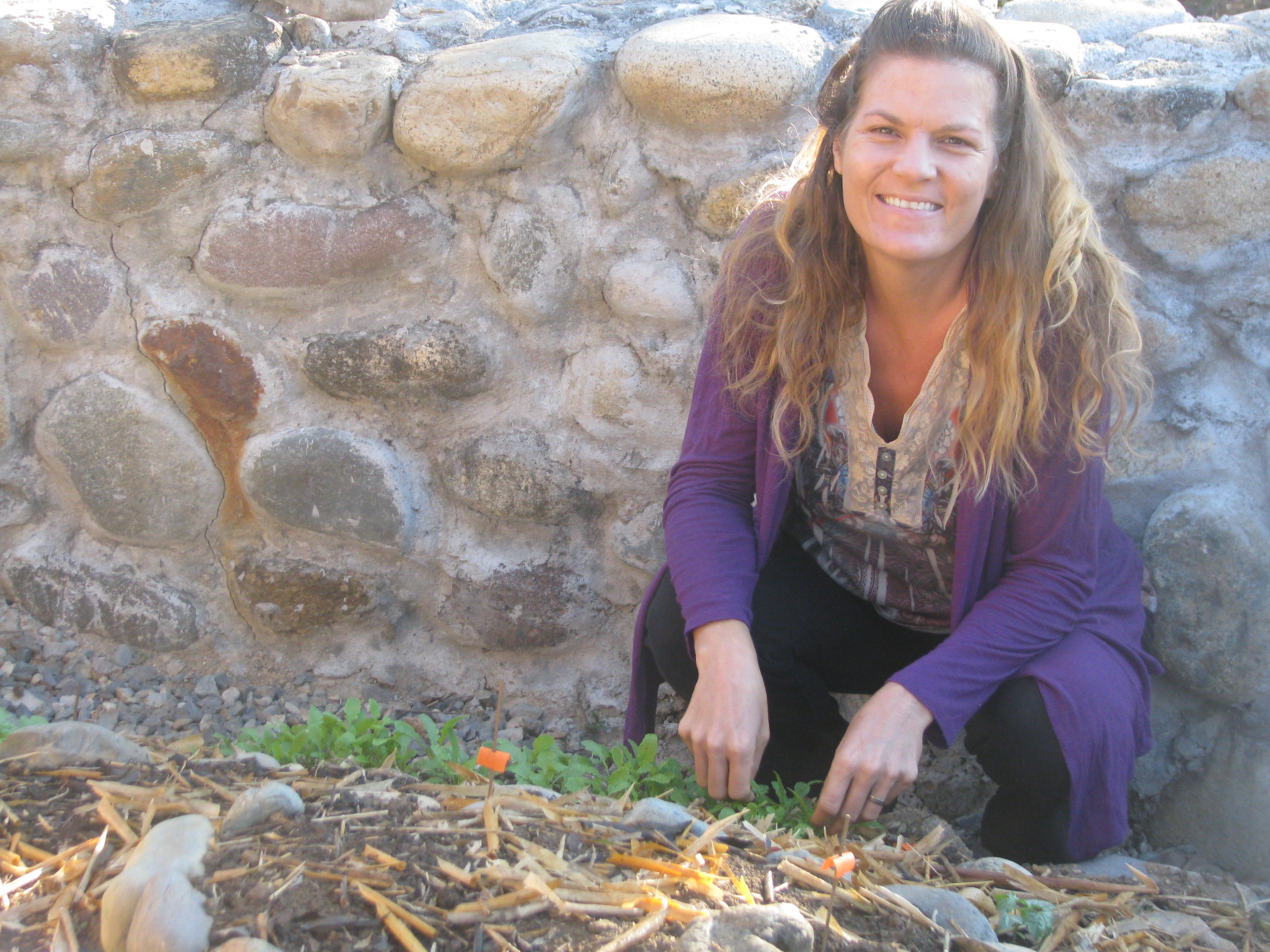
We started our first garden project in January, 2015, just a couple of weeks after arriving to live on the ranch. We were gifted a 30 foot by 30 foot space here with a rock wall already built around it. Rather than fill it with linear and straight rows of crops, we created a main, raised, keyhole bed (a ¾ circle bed with a keyhole shape in the middle for turning around) with another raised circle bed enclosing it and raised beds around the edges.

garden6


For compost, we spent many days gathering ‘green’ (kitchen scraps, sheep manure) and ‘brown’ (dried leaves and straw) manure creating a lasagna layering pile system as the organic matter compost to add to our soil. We trucked in silt soil from the banks of the riverside nearby to add to the soil in the garden and the compost. We collected dried bamboo leaves on the ranch to use as our 3 to 6 inch cover mulch (with thicker layers to come as the plants grow taller) to help with water retention and weed suppression. We lined all the paths with river rock to help with erosion and because it looks good. This we call our “Rio Jardin” (River Garden), as it is right next to the river.

We’ve filled the beds of the Rio Garden with three kinds of tomato plants; eight varieties of beans and legumes; three kinds of peppers; greens and cabbages such as kale, arugula, mizuna, tatsoi, bok choy; yams and potatoes, red/green/white onions, cucumber, jicama, daikon and regular radish, and cilantro. We’ve already enjoyed the radish and some of the greens. We look forward to the next few months of harvesting and learning; adjusting and responding. Eating! This is truly our experimental garden with many lessons happening around seed germination, plant placement, and adjustment to the tropical yet arid climate here during the dry season.

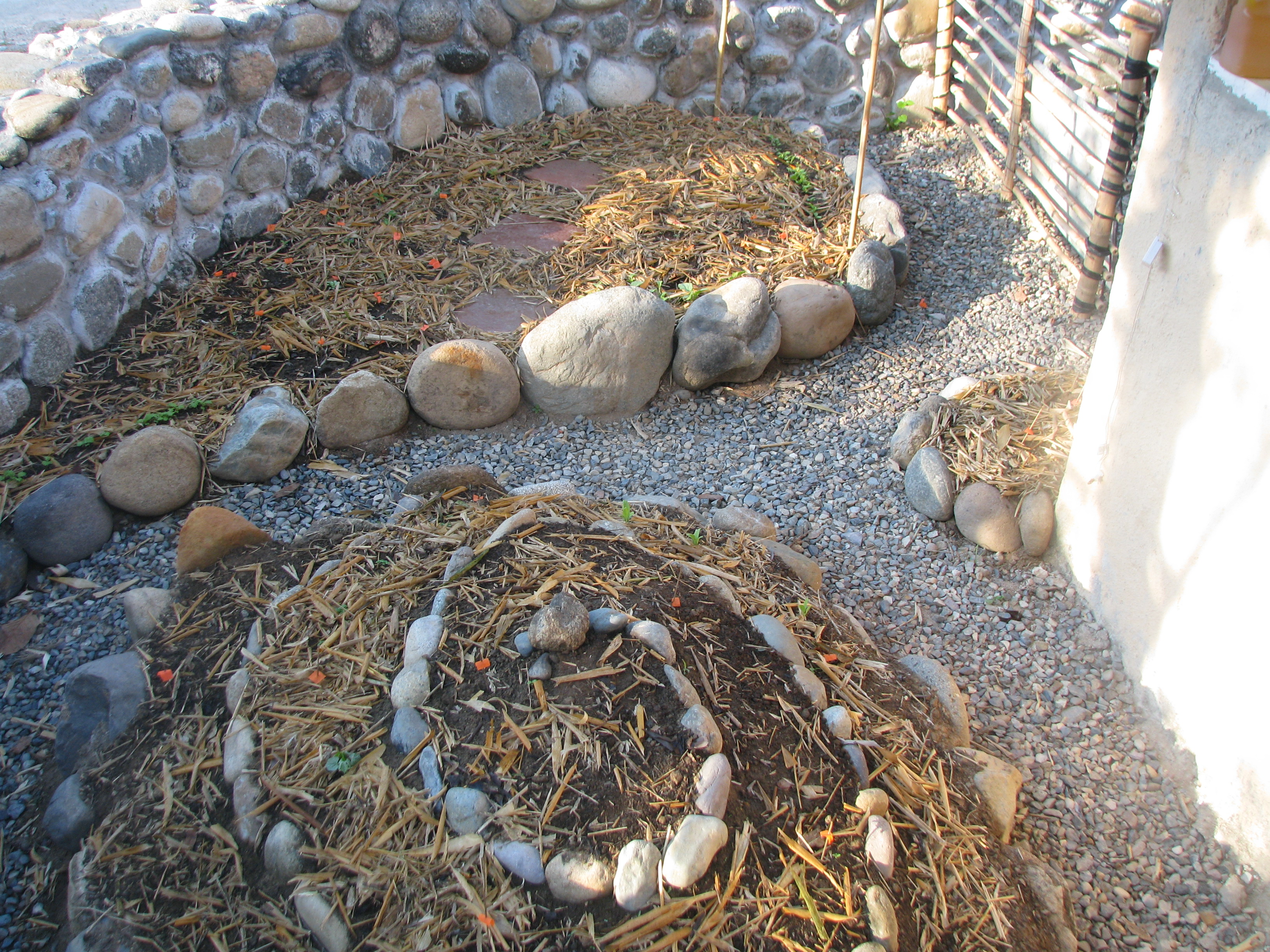
The next garden we started is our “Casa Jardin” (House Garden), a ‘zone one’ garden, meaning one that is close to home and therefore includes plants that are used regularly and need more attention. Once we moved into the house we are staying at here on the ranch, we started trucking in soil from the river again because the top soil around the house had been destroyed during construction. We spent days clearing out debris and pulling weeds (that weren’t edible we hope) to clear spaces to plant. In a cleared space right by our outdoor kitchen, we created an herb spiral- a four by five foot mound of dirt with river rocks moving up from bottom to top to form a spiral shape. An herb spiral takes a 30 foot linear planted bed and reduces it to a much smaller footprint. Plus it looks really neat and mimics a shape regularly found in nature (always a good thing when designing garden beds.) We filled the herb spiral with dill, thyme, oregano, basil, cilantro, cumin, mustard greens, green onions. We included some medicinal herbs such as calendula and Echinacea.

garden5


We also created a greens garden bed next to the spiral garden with mizuna, kale, mustard, tropical lettuce, tatsoi, and a native medicinal green called qualite alvaro obregon. Greens are impossible to find here at tiendas (stores), beyond iceberg lettuce, because they don’t store and transport well due to the heat. We have all felt a deep craving for more greens, especially after being used to regular doses of greens in BC, Canada. Radish greens and morenga leaves (a medicinal and edible tree grown here on the ranch) have helped meet this need so far. We filled beds along the path in front of and the sides of the house with sunflowers, artichokes, more mustard greens (good ground cover and green manure crop), and some native flowers. Keeping the four ranch dogs and our own three dogs out of the beds using twine and bamboo fences has been important. How to keep the wandering and hungry ducks from the pond next to the house out of the greens bed is the next dilemma, although we put down bamboo leaf mulch, spray with the pepper-garlic solution, and planted mustard nearby so that will hopefully help. We are still waiting to catch a pato (duck) in action as it tugs on our kale!

And, our grand vision and most recent garden manifestation is a ten minute walk from home called ‘Tranquila.’ A sloped piece of land with large granite rocks, this is the plot of land that we have purchased here at Rancho Amigos. The lot contains a water cistern located over a natural spring so fresh water is no problem. The top soil is dark brown, has some good worms, and the years of cutting down feed grasses for sheep and cows and letting them mulch in place has kept the soil in good shape.

garden4


It is the work of hardscaping, double digging out soil and creating paths that leads us to get up at six in the morning to get some of it done before the hot sun comes up. It is foundational work, work that we won’t have to do again. It is hard, but, it is also satisfying…watching raw land become the infrastructure for our garden. We are planting seeds as soon as the soil has been double dug, formed into circular, raised winding beds with plateaued tops, and sprinkled with compost. We’ve been adding the same mulch back to the beds that we raked from the ground before we started tilling. It forms straw nests around our sleeping seeds and a light blanket of cover for our scattered seeds.

We planted more beans since they germinate quickly, seem to grow well in this climate, can be dried, and are great nitrogen fixers. We planted sunflowers, artichokes, and other tall plants for privacy and shade. We started several trees in bags and will plant them as soon as they are ready to add diversity, shade, microclimates, and environments for wildlife. We planted eggplant, squash, and pumpkin (and soon watermelon) where they will have room to sprawl and spread out. Making a mound, we created a ‘sisters’ planting inspired by Native Americans. Corn, pole beans, and squash form the perfect combination of support, both structurally and in the soil. Scattering seeds across the soil, we sowed quinoa, buckwheat, amaranth, chia, and, soon, flax. These will form the foundations of our diet, along with the beans for protein. Joining the party are medicinal flowering plants, more peppers, and tomatoes. Our future plans for Tranquila include creating a small pond in the middle of a natural gathering of rocks, a stream leading to the pond, pathways to the large sitting stones and boulders on the lot, tall plants all along the fence line for privacy next to the ranch road, and whatever else our imagination comes up with! We envision a place where design has given form to the food and function to the wild. A place where we and others can come to study the plants, sit on the rocks, meet in a circle under the shade tent, dip our feet in the pond, and wander the paths, foraging as we go.

We’ve held some books like bibles along the way, combing over them time and time again. Two such books are Gaia’s Garden: A Guide To Homescale Permaculture and Rodale’s Organic Gardening. Yet, also, we’ve been learning as we go, responding to the needs of the plants as they arise and feeling what the land and nature wants. It’s important for us to access our soul’s knowledge of cultivating the land for food; its’ experience with growing food which is actually much more familiar to us than the more recent industrialized experience of easy and disconnected non-food grocery shopping excursions. We’ve forgotten our native roots as hunters and gatherers and buried our instincts about plants and how to grow them in a sustainable way.

Our gardens have brought us joy and peace already, even as they’ve required some sweat and effort. Every seed we plant is like a new baby needing attention and focus until its more mature and can stand on its own. We pick off every caterpillar and unidentified Mexican bug with love and care; spray every leaf with a combination of garlic and pepper spray that bugs hate. We support the garbanzo beans with sticks because we didn’t plant them close enough together to let them lean on each other like they like to. Each plant is held with gratitude and given energetic attention. That’s a lot of babies to care for!

Our gardens have already drawn attention here locally. There are very few personal gardens in this area, even though poverty is a common here. The nearest grocery store is 90 minutes away (when the weather and roads are good) and yet the village closest to us doesn’t stock anything more than a few tomatoes, potatoes, onions, and eggs. The locals who work on the ranch have gone from feeling perhaps a bit confused by what we are doing to more and more interested in it. They ask us many questions about what we are growing and give us tips related to cultivating in this climate. We have already started giving away baggies of cilantro and radish greens and received cucumber and cacao seeds in return. Many more are expressing interest in exchanging with us when the real harvest comes in.

Gardens can invite the imagination to come to play. If we allow ourselves to move beyond the linear rows, typical crops, and pest warfare of mainstream gardening, the possibilities are as limitless as nature’s manifestations. In the garden, there is both a strong sense of the present and the future. We are enjoying the process of creating the infrastructure of our garden beds and paths, which will serve us for many years. The first layer of weed suppressing and water retaining mulch that we lay out begins a legacy of layers of decaying organic matter that will serve the soil and our bellies for a long time. The compost piles we create today serve to fertilize the soil for the rest of its (and our) lives.

It is the gardens that have received most of our time here at the ranch so far and, also, every bit of time spent feels worth the rewards, both in the present and for the future. This legacy of growing chemical-free, ecologically friendly, and truly local food is one that we are proud to be creating and to leave for future generations. Or, at the very least, for the immediate future needs of our hearts and bellies.

Jelelle Awen is co-creator and facilitator of the SoulFullHeart Way Of Life. Go here to connect with Jelelle on facebookVisit the SoulFullHeart website  for more information about virtual sessions with her.
Building The Ark: Life At El Rancho

By Jelelle Awen

20141218_115604

The ark is about learning what I don’t know; remembering what my soul knows; and using my intuition to feel out the rest.

I have felt like Noah at times; holding a prophecy of a big storm coming and making plans and taking actions to survive that storm. Like Noah, with some foresight and surrender to the Divine, doing something for which most of the culture is not understanding or seeing. My version of the ark was my passenger van and the human and dog companions that came along with me on the journey from Canada to here in Mexico are as treasured as the pairs of animals saved to repopulate the earth. We landed here in our ark on the shores of what feels like our safe sanctuary. A place where water flows not from city taps but from natural springs. A place where exotic fruit grows year round from trees. A place where no insulation is needed on homes or on bodies. A place where having no electricity or refrigeration is not a big inconvenience but a manageable work around. A place where many people ride horses to get around and cars are just another option. A place where traffic slowdown is caused by a swarm of cows not frustrated commuters.

The storm is growing, building strength in the skies of the world. These are dim skies to me right now; they feel far away from the daily realities here on the ranch. But, I can feel the thunder rumbles of war in ISIL occupied areas and the Ukraine; in the economic contentions of European nations faced with growing debt that can’t be repaid; in oil price fluctuations due to diminishing reserves and bubbles bursting fracking empires; in the diminishing fresh water resources around the world and especially the southeastern United States. And maybe the lightning from these events is still far off and hasn’t charred the ground and struck near or in your world. But, as so many people have foretold, the storm that will end this industrial age as we know it is coming. Whether in ten days or ten months or ten years, the world as it being run and experienced right now just isn’t sustainable in any kind of long term picture.

We’ve become so out of touch with our intrinsic nature as hunters and gathers and growers. Becoming so out of touch has made us disconnected about where our food comes from, how it is grown, how it is treated (in the case of animals), how chemicals are used on it, and how synthetic or natural it is. Becoming so out of touch has made us easy victims for the storm that is coming. Rather than being able to tough it out relying on ancient instincts of survival, so many people will be unable to respond in any way that is beyond feeling helpless, hopeless, and immobilized. Many people, sadly, will simply end their own lives rather than have to find the will to survive in a world without all the easy conveniences that they are used to.

This last week has felt like another phase of ark building. The ark this time isn’t about transport to sanctuary; it’s about reconnecting with my human instinct and imprint for feeding myself. The ark now, for me, is about growing my own organic food and incorporating what grows here on the ranch already into my diet, even if I’m not familiar with it. The ark is about learning what I don’t know; remembering what my soul knows; and using my intuition to feel out the rest.

We have all been building this ark with dedication, getting up by the rooster’s call at six am to work at Tranquila, our third garden space here at the ranch. Tranquila is described in much more detail here. We’ve put in five or six hours a day during the hardscaping and shaping of earth phase that is required to sculpt raw earth into a garden space. This is the laying out of floor and wall boards, pounding in of nails process of building our ark. And inside of the ark, instead of just animals, there are beans, tomatoes, quinoa, buckwheat, amaranth, and much more. Inside of the ark is true self sustainability and connection back with a primal instinct that has been numbed by easy living.

As I watered the gardens in Tranquila for the third time today, I felt how I don’t resonate with the idea of being a gardener. For me, it’s not about being something outside of who I am just because I am growing seeds, tending them, harvesting them, and eating them. I am not a gardener; I am a human. A human reclaiming the inner gardening abilities inherent in my soul and embraced by my heart.

Jelelle Awen is co-creator and facilitator of the SoulFullHeart Way Of Life. Go here to connect with Jelelle on facebookVisit the SoulFullHeart website  for more information about virtual sessions with her.
Death and Rebirth: Life At El Rancho

20141218_115604

By Jelelle Awen

Death is a necessary and unavoidable result of being alive. Every beginning brings an ending. Yet it is hard for most people to embrace death as a natural and sacred process. On the ranch there is death and rebirth all around us. Many lambs were born this winter and some will die from predators and getting sick. Every day we plant new seeds and pull up other plantings due to thinning them out or when they are ready to eat. Death and rebirth can also be metaphorical- a letting go of something that is complete in order to let in a new arising.

We had a death ceremony this week for my husband Wayne’s expression as a painting contractor. He has run his own painting business since 1984, a young married man supporting two daughters with his first wife. Running his own business offered autonomy in one way and yet, always, there was the customer to think of and respond to and many details to hold. For a number of years, he had felt pressed with time and energy, wanting to focus more on our healing work and serving people. As a symbolic death, we burned a painting shirt of Wayne’s in our fire pit and he shared feelings and memories from his career. We honored what his career had produced, the family members it had supported, the clients it had pleased. Wayne felt how he is in an in between space now as his authentic expression emerges from the ashes of his painting career. Out of this death and ending comes a rebirth into a new form, as it always does.

There are now chicks at the ranch. Fuzzy yellow and black beings with rapid heartbeats. I held one in my hand that I had rescued when it ventured outside of its fenced area. I placed it back in with its mother and it quickly tucked underneath her, seeking out safety. This is life in all its chirpy and adorable form. We have started eating eggs again after being vegan for almost two years. It was just too difficult to get imitation meat products and even tofu or tempeh in this part of Mexico (other than driving to Puerto Vallarta). We still haven’t found nutritional yeast here which provided a good source of B12 for us in the past. Eating eggs again yet holding a chick in my hands brought up the death and rebirth cycle again. Appreciating the sacrifice of the unborn chicken (if it was fertilized) to feed my needs.

We are creating our third garden here, this one on the lot that could eventually hold our own house if that alchemizes for us. Our first garden is what we call the ‘river garden’, a more conventional (although still organic) vegetable garden with curved, raised beds. Our second garden is a ‘zone one’ garden, the things that we will eat and pick daily so need to be near the house. We created a herb spiral and a bed of lettuce greens, kale, mustard, radish, tatsoi, and mizuna right by our outdoor kitchen. Our third garden is called tranquila and our vision is to create a true sanctuary with winding paths, clusters of microclimates, a shady area around a tree inviting conversations or rest, a small pond created from a circle of rocks, a visually diverse offering of native and tropical plants, shrubs and trees. Many of these plants I have never grown or even heard of. These are heirloom plants, some from Africa and South America, all able to survive the heat and humidity here.

This is birthing, putting all these seeds in the ground. Watering them from nothing to something. And then, death by pulling and pinching. Sautéing and eating raw. Boiling and baking. The sense of both death and rebirth here makes it feel more alive, less cushioned, and more real.

The bigger context of death and rebirth seems so poignant now with the state that our world is in. Violence and war are a continual reality in many parts of the planet. There is the grand death, the slow dying of the industrial age as it winds down after a feverous and fast paced life. What will be reborn of the human species after this death, whether it is in 1 year or 30 years? What will arise from the ashes of technology? These are important questions, yet, here, the heart beat and rescue of one little chick seems equally important. Or, at least, more immediate.

Jelelle Awen is co-creator and facilitator of the SoulFullHeart Way Of Life. Go here to connect with Jelelle on facebookVisit the SoulFullHeart website  for more information about virtual sessions with her.

Finding Home And The Unfolding Mystery: Life At El Rancho

20141218_115604

By Jelelle Awen

I’m sitting here at an internet cafe in Tule, a town about 90 minutes from the ranch. Normally I’ve been writing ahead of time and sharing it once I am in town. But, today, I thought I would try just writing and see what comes out. I feel a bit buzzed and heady from being in town, even though this is more like a small village than a town, especially in the western sense. Even the small amount of activity is a lot for me to digest now that I am used to being in the peace and quiet of the ranch. It is amazing what is becoming overwhelming and how quickly.

I have recently realized that this life is most likely the only one I’ve had within an industrial society. The only life where easy electricity, food, water, and shelter were readily available and expected. This explains so much about why modern technologies and conveniences, while I acclimated to them, still felt foreign and uncomfortable to my soul. When I am in our gardens recently, I feel this acess to my soul’s knowledge about growing food beginning to open up to me. I know how to do this, I think, and then I read my organic gardening books for validation. I like to lead with intuition and retreived knowledge first, and book knowledge second. I like for the plants to tell me what they need and want rather than use my mind to deduce it. I feel that this intuitive way of gardening is what is most natural to my soul in past lives as a healer, medicine woman, priestess, etc. Maybe this intuitive way is what is most natural for all people.

Nature is beginning to call to me. Not just in a casual way that happens when you take a hike in the woods, but in a deeper way that invites me to experience both the groundedness of the land and the metaphysical and transcendal aspects of the natural world. I have been curious about exploring parallel universes and other dimensions for a long time, yet felt to focus on my emotional healing primarily and healing my connection with the Divine in a way that was grounded in my body. After ten years of this focus, I can feel a rumbling of curiousity and desire in me to expand my consciousness and see things which cannot be seen by the eyes. This, it feels like, is more familiar to my soul than the logical and practical world I have been raised in.

This weekend, Wayne and I are going to camp out for a night in the hills. To light a fire, to feel the oak trees around us, to take in the soul opening view of the river and the lake. To connect with the Divine and our guides. To see what opens up that won’t be easy to explain to the rational mind. To feel not walls around us but the open air. We’ve been camping quite a bit the last few months but now that we are in a house, which is also very appreciated, we both feel a desire for the open air. And for whatever metaphysical journey our souls would like to go on.

It is interesting how much it feels like home to me to be without easy internet access and all the other things I have been used to. I feel that this sense of home is the core of our sacred humanity and what I call our wild self. We’ve been tamed by industrial society and lost our connection with so much of what makes us and the world sacred. I like the feeling of appreciating the home within me, the home with the Divine, the home in nature, and the home in metaphysical realms. My journey has been about finding home in all these ways and, yet, also to be open to experiencing the ongoing mystery arising in every moment.

Jelelle Awen is co-creator and facilitator of the SoulFullHeart Way Of Life. Go here to connect with Jelelle on facebookVisit the SoulFullHeart website  for more information about virtual sessions with her.